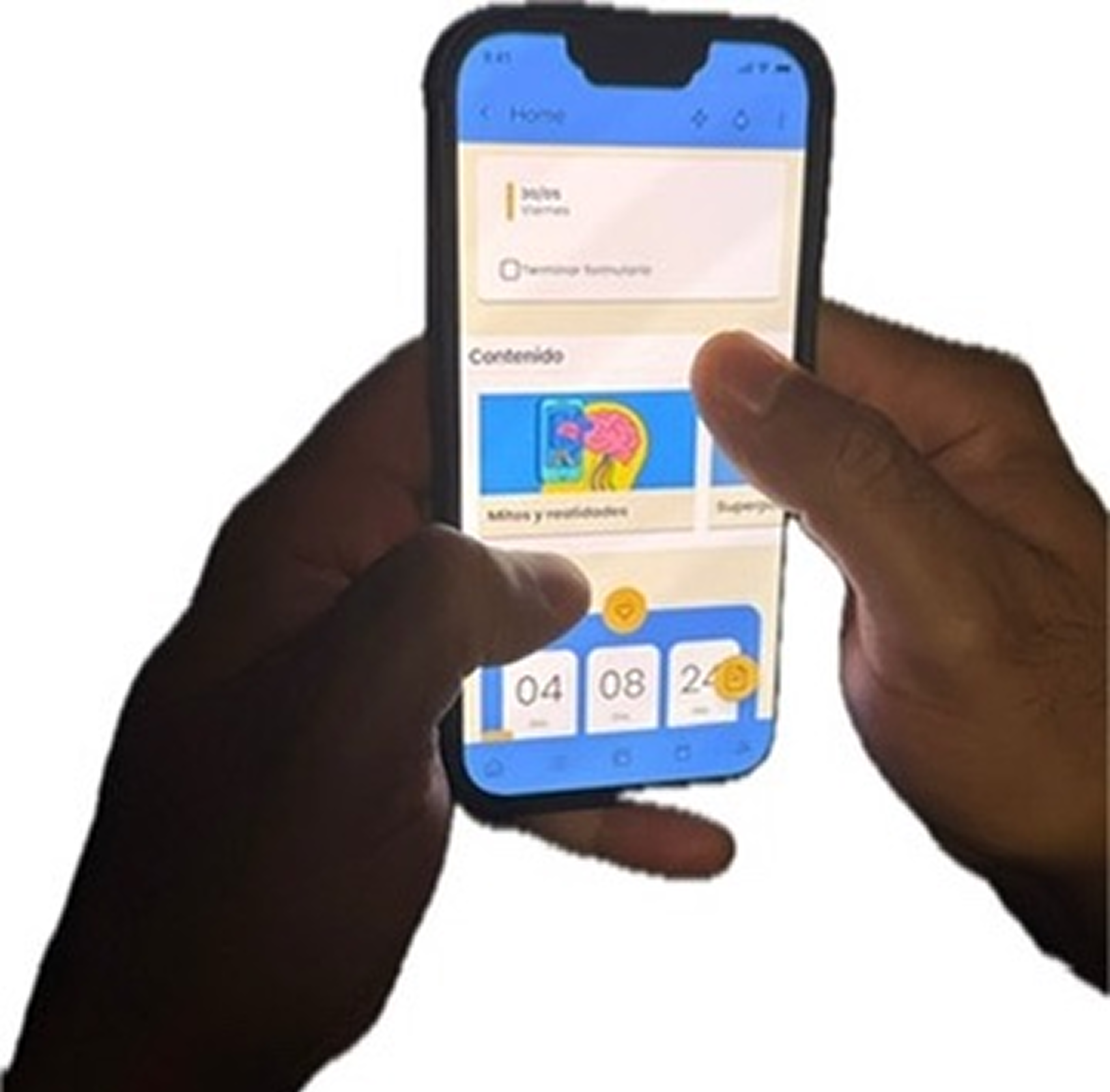
Tedeache
Support app for people with ADHD
The proposal consists of a hybrid app within the digital health and wellness sector, focused on providing comprehensive support for people with ADHD (Attention Deficit Hyperactivity Disorder).
The product is designed to improve organization, concentration, time management, and routine tracking, covering needs that are currently not resolved in a single platform.
It is estimated that more than 4% of the world's population has Attention Deficit Hyperactivity Disorder (ADHD), according to the World Health Organization (WHO). In Spain, between 5% and 7% of children and adolescents are estimated to have ADHD.
Daily problems for a person with ADHD include: organizational difficulties, time management problems, attention difficulties, impulsivity, and feeling overwhelmed.
These difficulties can impact job performance, personal relationships, mental health, and in some cases lead to substance abuse or financial problems.
Our primary goal is to create value centered on people with ADHD, improving their organization, time management, and concentration by studying their habits, motivations, and frustrations in academic, professional, and personal settings.
Another objective is to understand how the main productivity and digital health apps operate, both nationally and internationally. This will allow establishing a benchmark for what users already consider standard in these types of tools, while detecting innovation opportunities that differentiate our application as a comprehensive ADHD support solution.
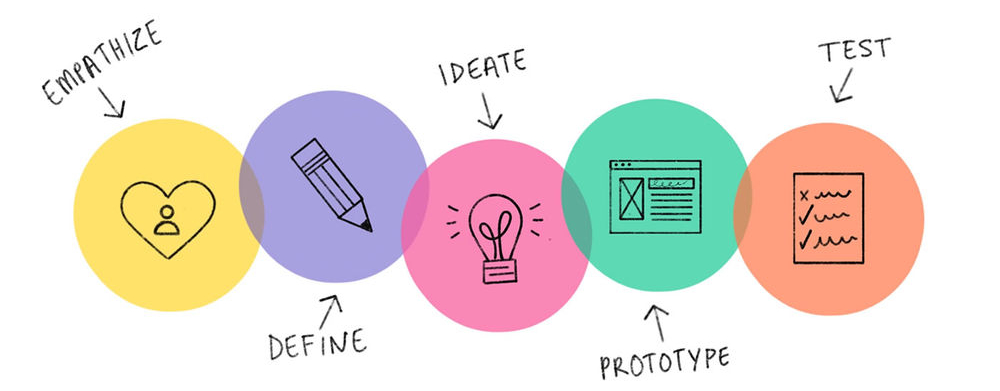
For this project I followed the Design Thinking methodology, an iterative user-centered process that allowed me to explore the problem in depth before designing any solution. I began by empathizing with people with ADHD, defined their real needs, ideated innovative features, prototyped in Figma, and validated with real users.
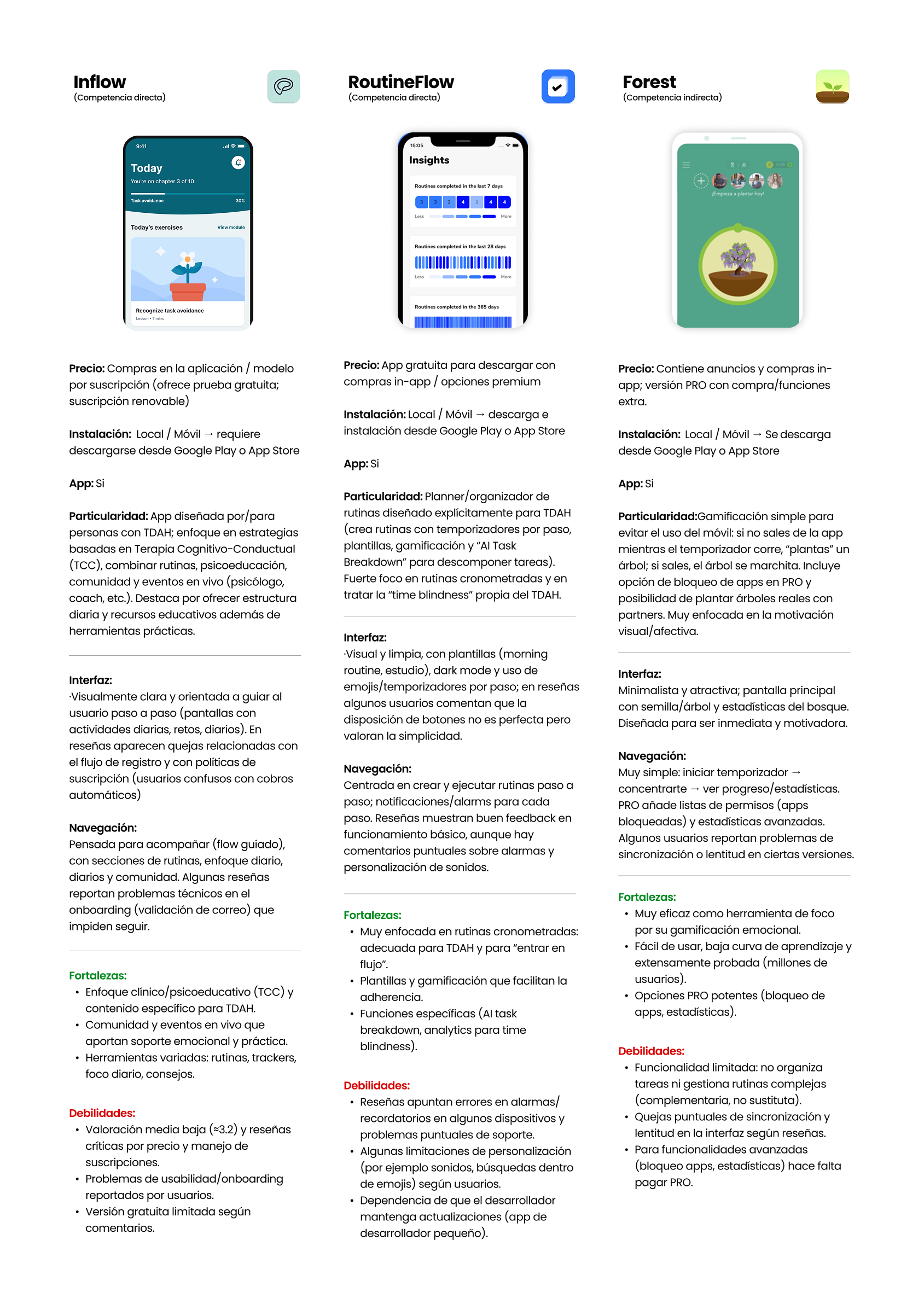
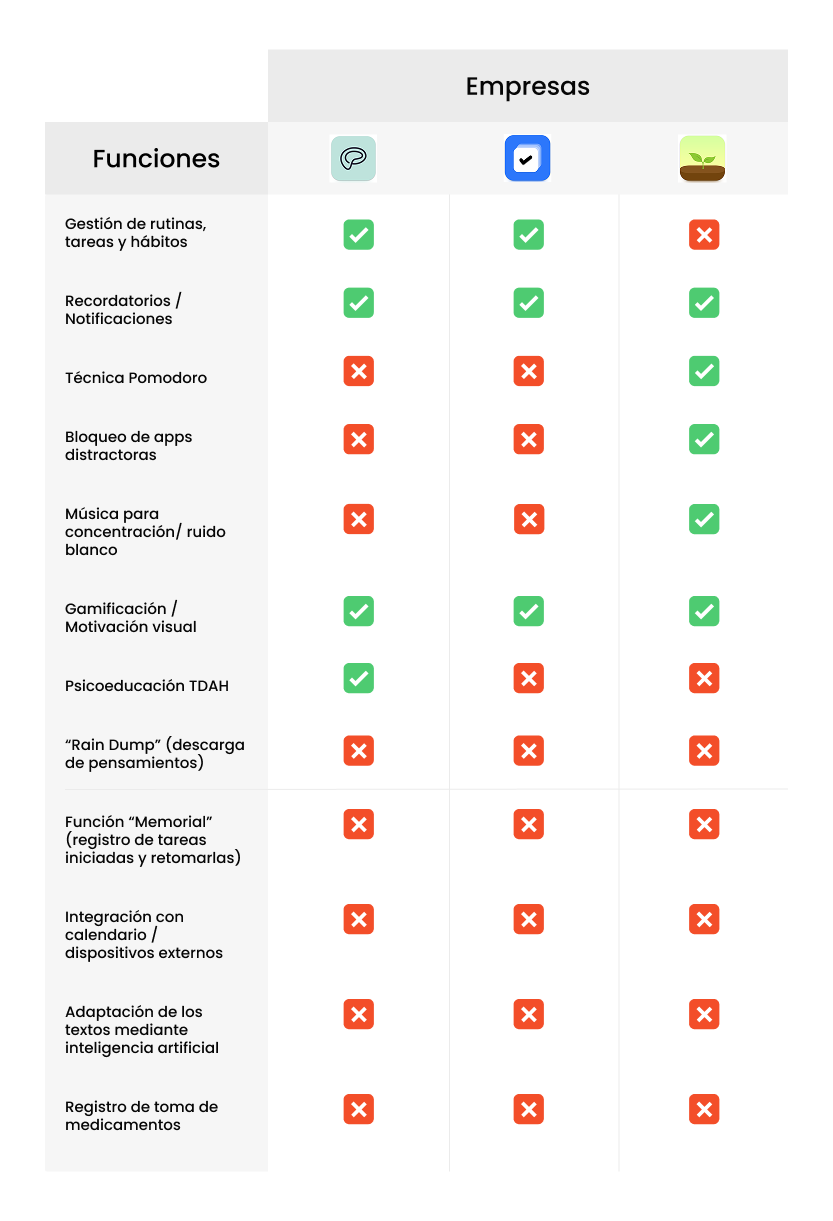
The benchmark aimed to analyze ADHD, routine, and concentration-related applications — Inflow and RoutineFlow as direct competition, and Forest as indirect competition — to identify strengths, weaknesses, and key functionalities.
It showed that Inflow excels in psychoeducation, RoutineFlow in timed routines, and Forest in visual gamification, but none integrate features like medication tracking, Rain Dump, or AI text adaptation.
This allowed detecting innovation opportunities and defining how Tedeache can differentiate itself as a comprehensive app.
A quantitative technique to collect information from a large group of users about their opinions, habits, and preferences in a structured way. The survey aimed to thoroughly understand user habits, needs, and expectations regarding productivity and ADHD management.
Users value features like gamification (55.6%), widgets and calendar sync (72.2% and 66.7%), and journaling and psychoeducation tools like daily videos and tips.
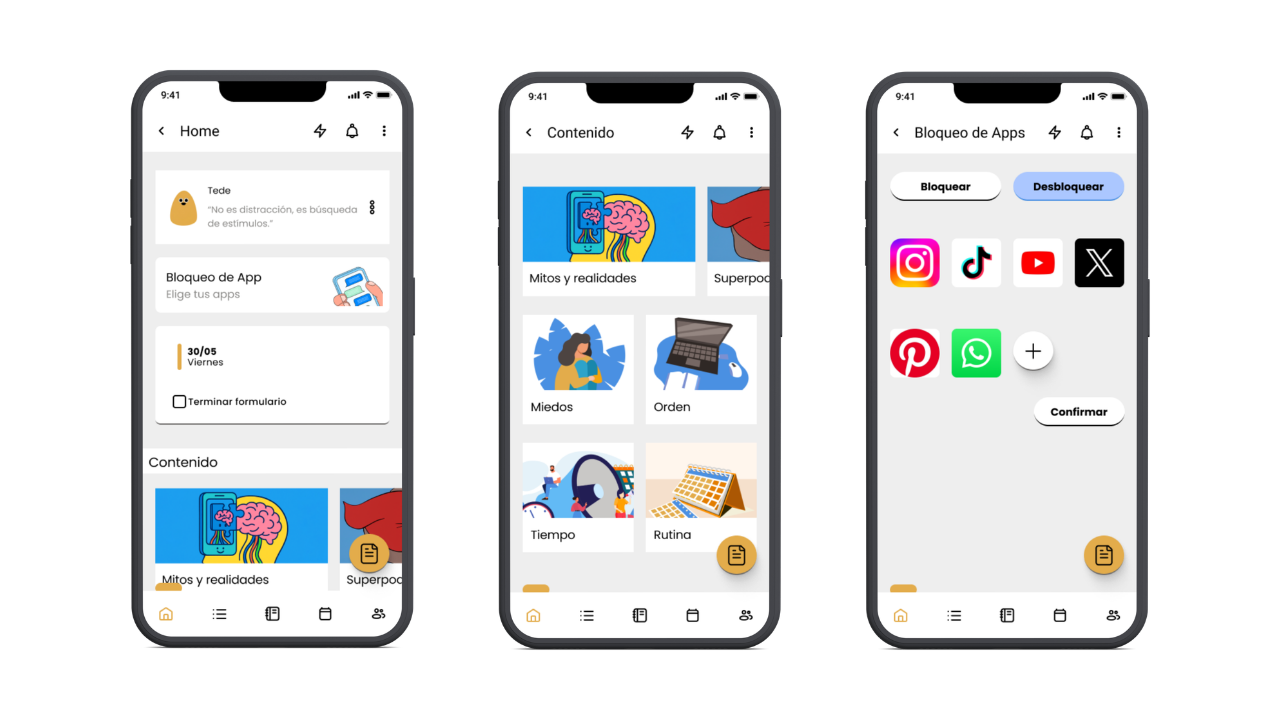
Interest in innovative features: Brain Dump in text and audio, medication tracking with side effects, flexible distraction app blocking, and AI text adaptation — 94.5% find it useful. Most prefer flexible, customizable options.
Users requested instrumental playlists, simplified calendar integration, community features, and an attractive interface. White noise and emotional playlists confirmed their value, and Memorial was validated as "very useful" by 55.6%.
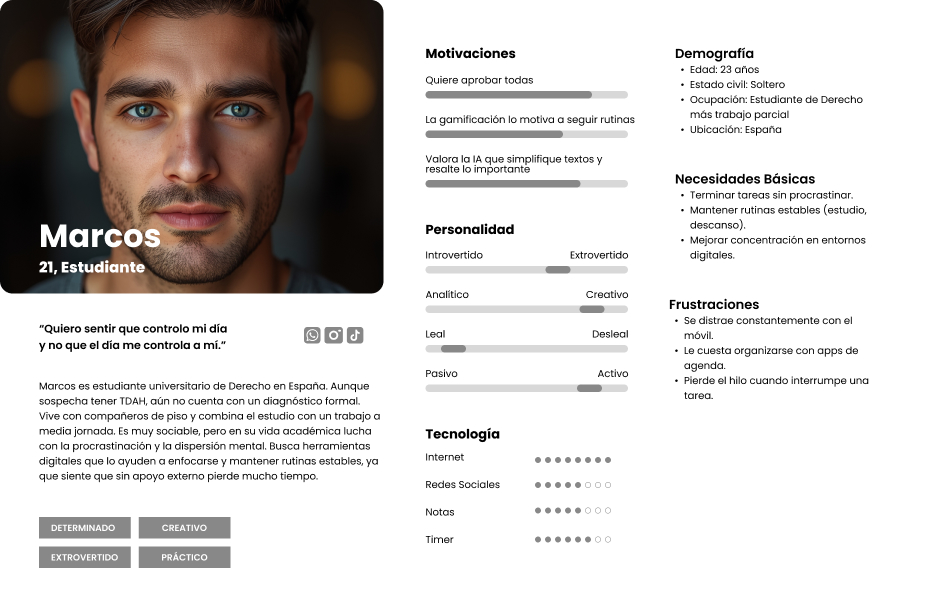
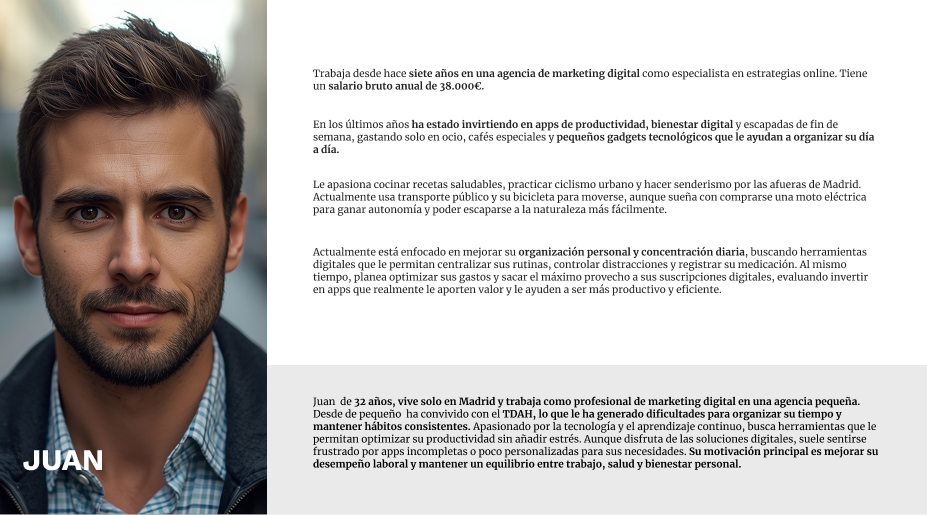
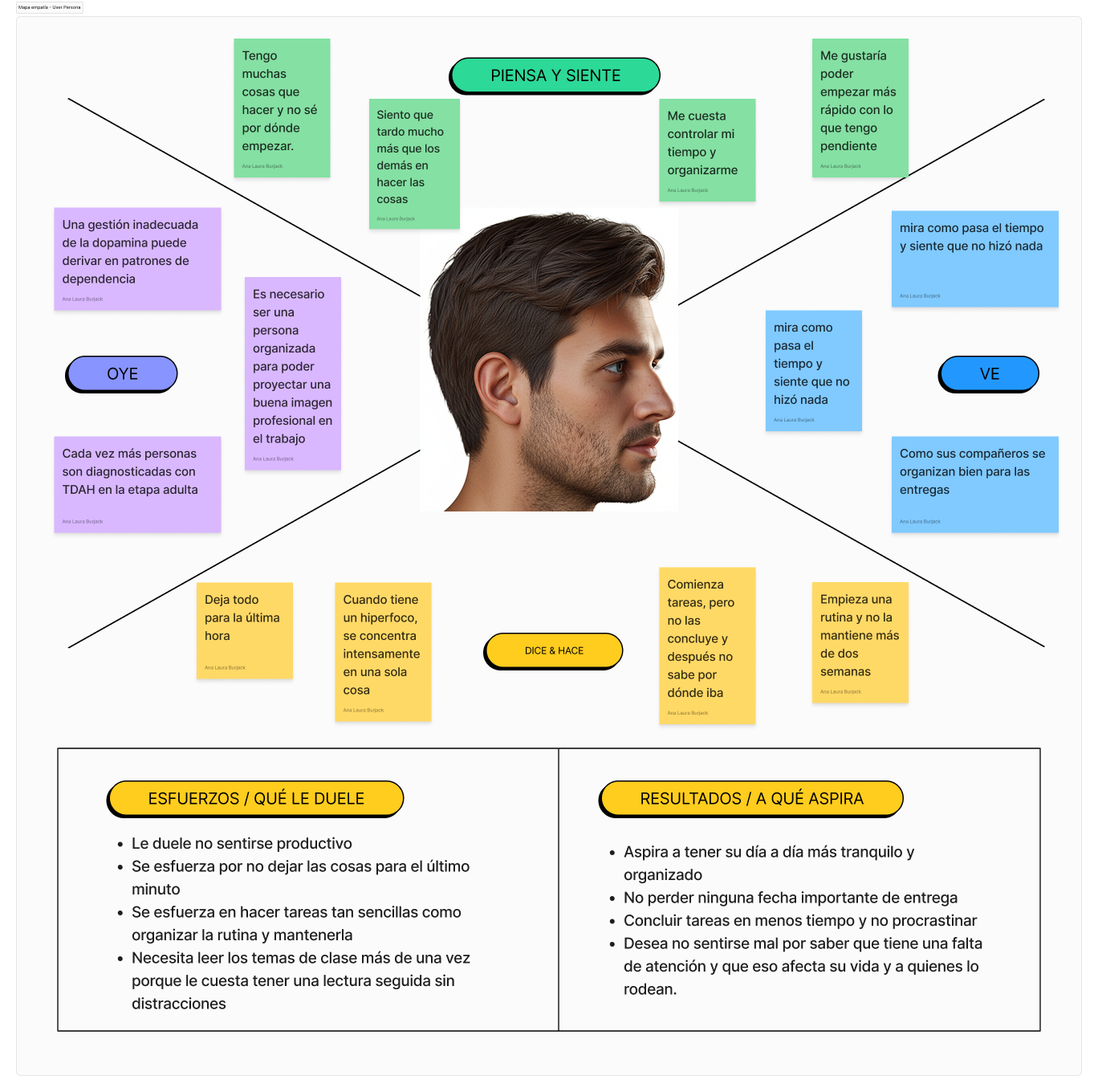
The empathy map allowed me to dive deeper into the user's perspective beyond quantitative data. Visualizing what the user thinks, feels, hears, and sees in their daily life, I identified an important gap between what the user desires — feeling productive and organized — and the reality they experience: procrastination, uncontrolled hyperfocus, and constant frustration. This tool was key for designing features that respond to real emotional needs, not just functional ones.
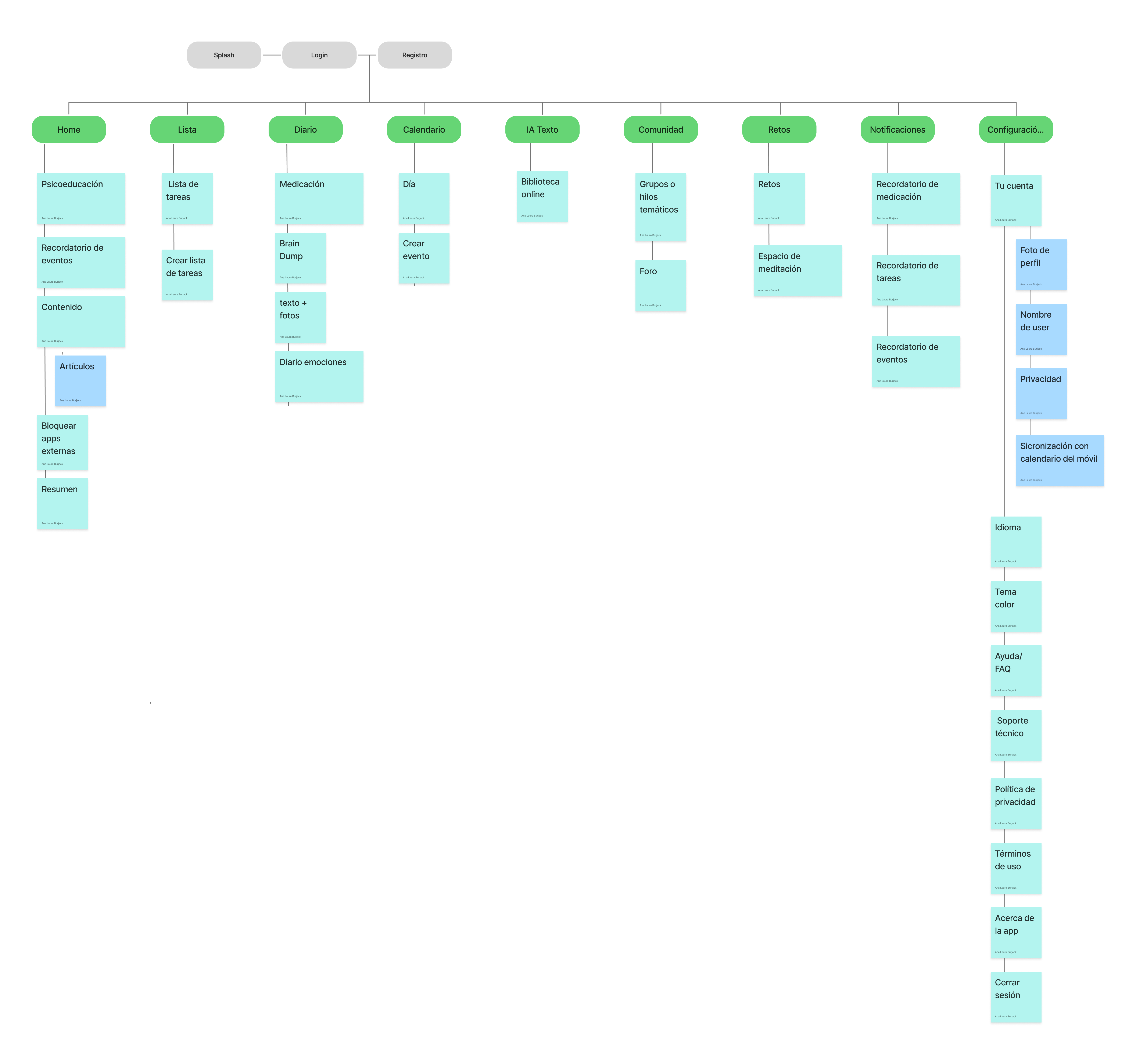
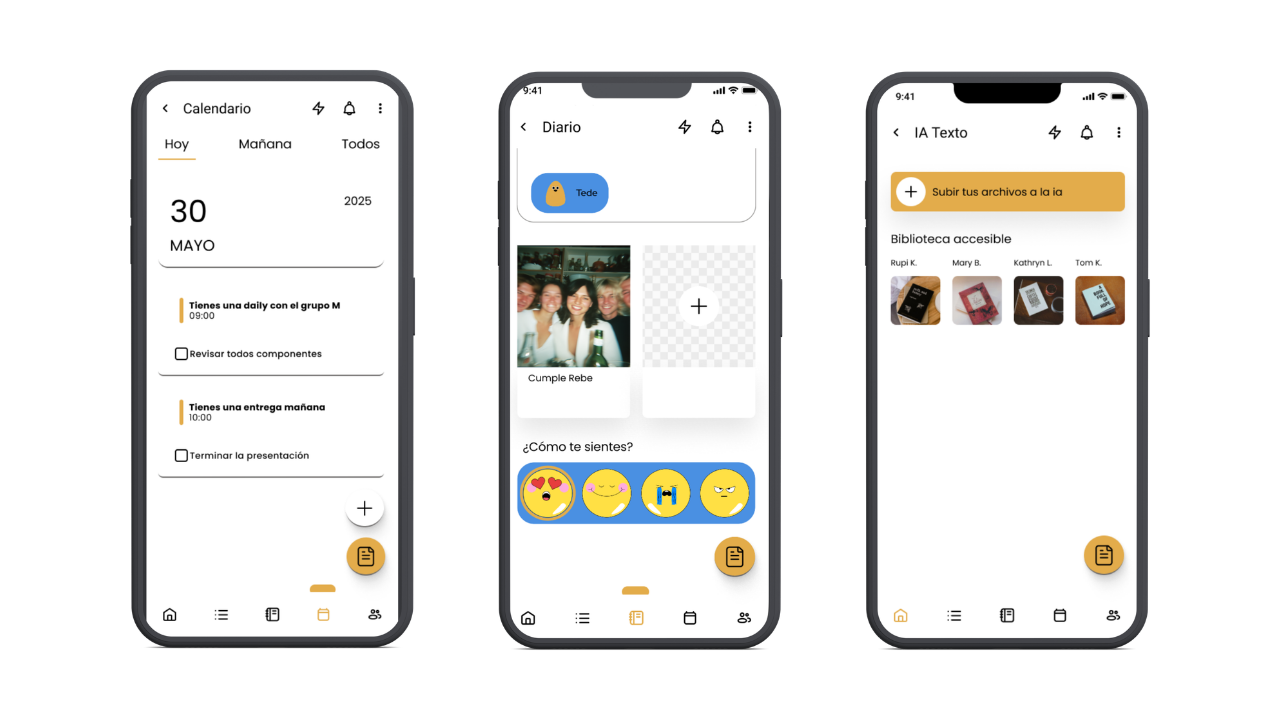
The information architecture defines how the app's content is organized, structured, and labeled so users can intuitively find what they need. To build it, I first conducted a Card Sorting, a technique where users group and name content according to their own mental model. The result was an architecture organized into nine main sections: Home, List, Diary, Calendar, AI Text, Community, Challenges, Notifications, and Settings.
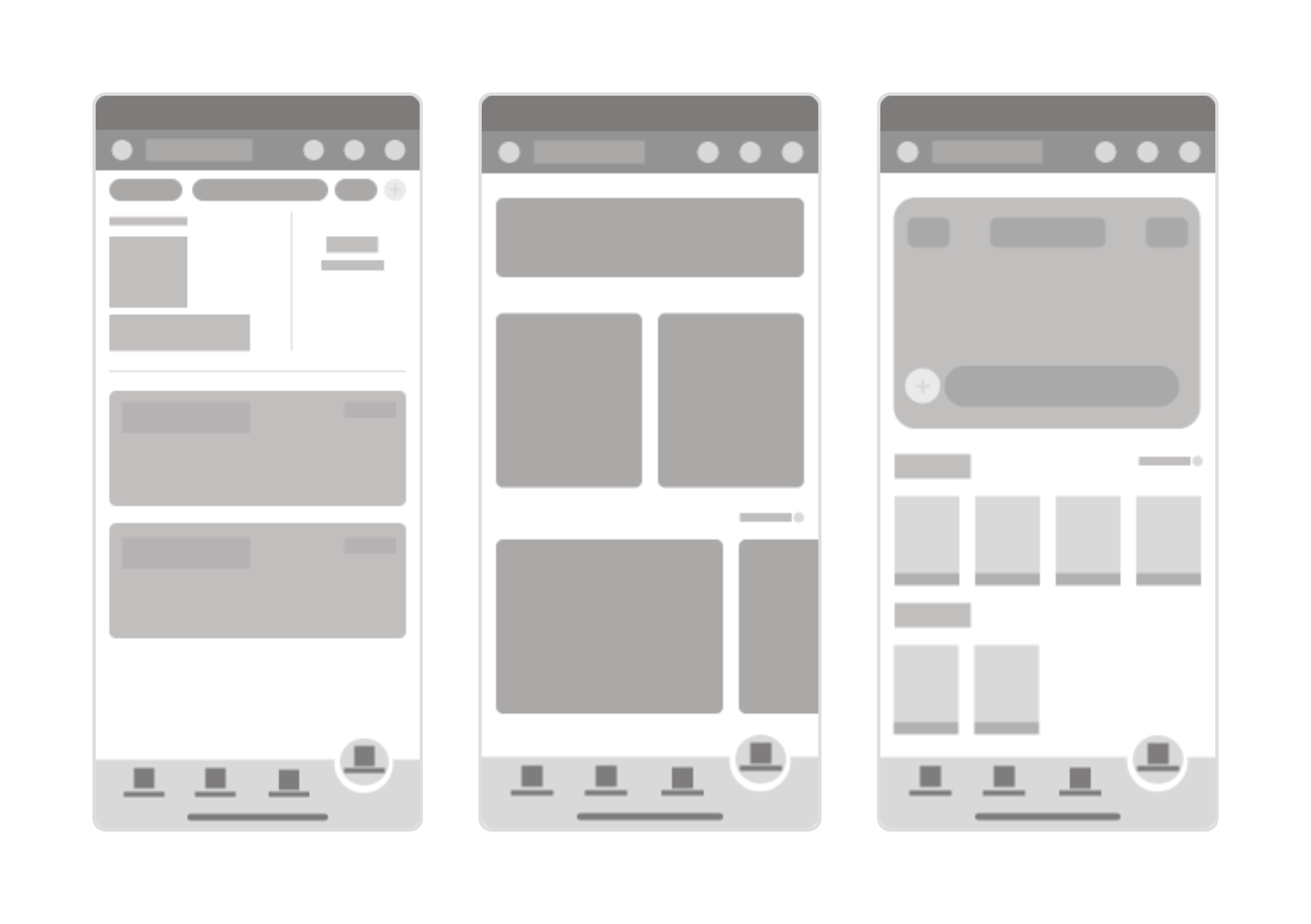
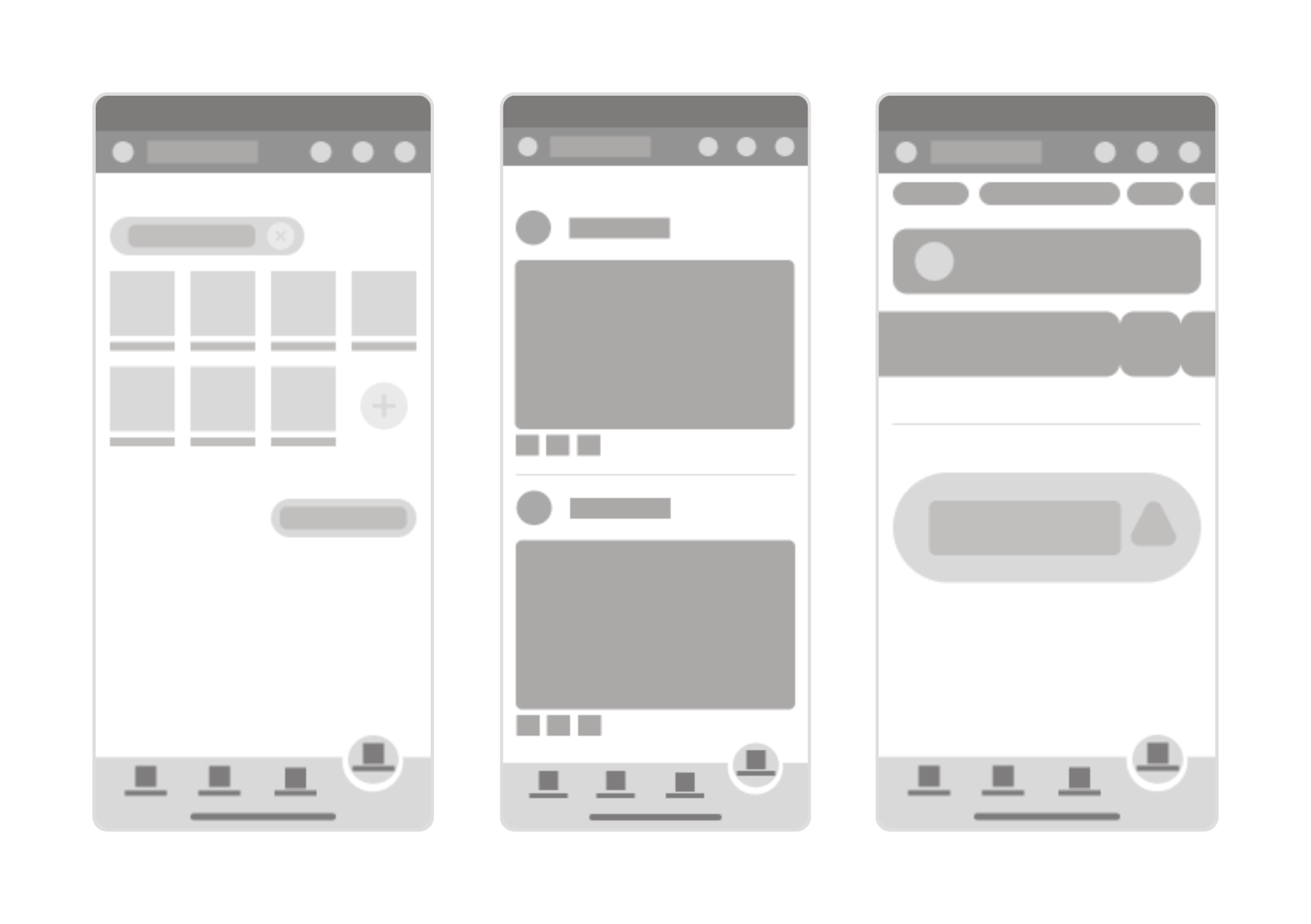
With the information architecture defined, I began the visual ideation phase by creating low-fidelity wireframes. These initial sketches allowed me to explore screen element distribution quickly without being conditioned by visual appearance, focusing solely on structure, navigation, and content hierarchy before advancing to high-fidelity prototypes.
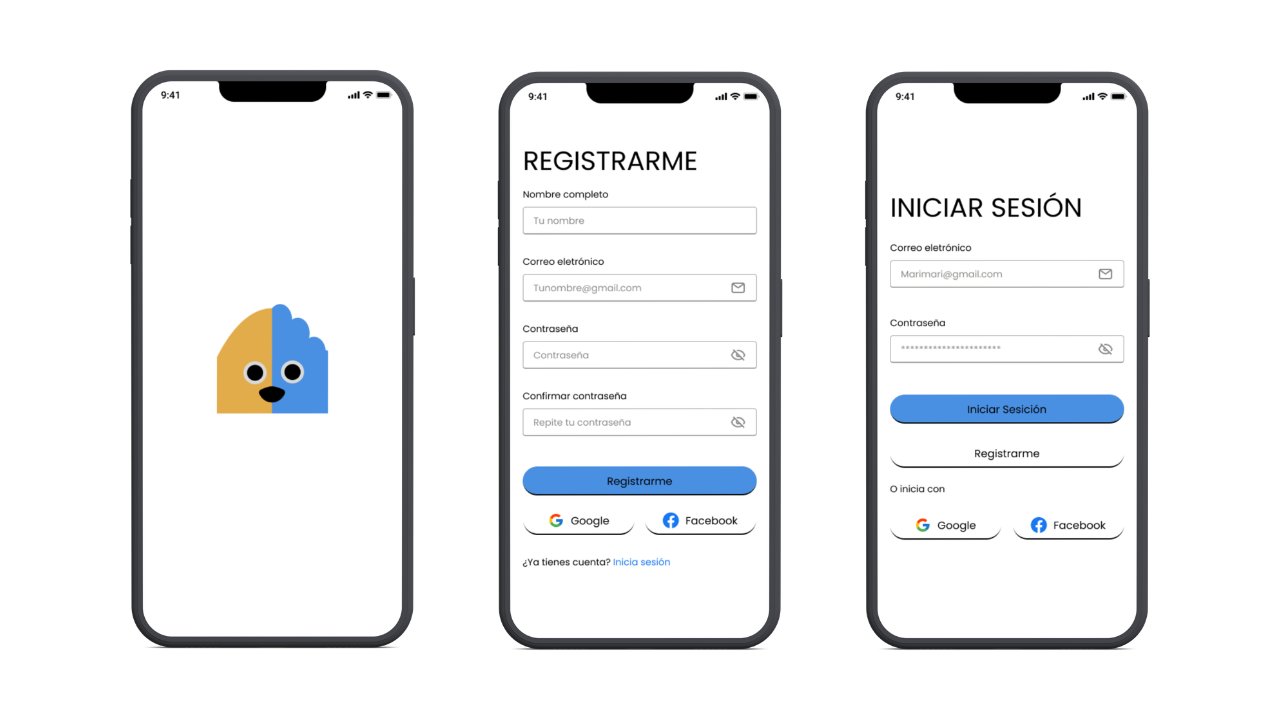
With validated wireframes, I advanced to the user interface design. In this phase I defined Tedeache's visual system: color palette, typography, iconography, components, and interaction patterns. The goal was to create an accessible, visually coherent interface adapted to the cognitive needs of people with ADHD, prioritizing clarity, simplicity, and reduction of visual overload on every screen.
"I felt calm, motivated"